In this guide
A City employee noticing a public-service issue faces a different task from an employee asking about their own benefits or employment record. Phoenix’s public PHX ACT announcement makes that distinction concrete. Reading the announcement carefully is a useful exercise in identifying audience, purpose and evidence without accessing a private employee system.
The source is PHXConnect dated February 12, 2025. It introduced PHX ACT for employee reports of common maintenance and service needs, contrasted it with the public myPHX311 platform, and described an email acknowledgment with a reference and status-contact information. Those are historical public statements. This article has not tested current access or confirmed that every detail remains unchanged in October 2026.
Begin with the announced audience
The publication described an employee reporting context. That is a different audience from a resident using a public service portal. It does not follow that every employee has every internal permission, or that a member of the public should seek access to the employee route. Use current directions supplied by the City for your actual role.
The distinction also prevents a common search mistake: eCHRIS, PHX ACT and myPHX311 are not interchangeable names for one task. The City’s benefits page provides eCHRIS context for employee administration. The dated PHX ACT announcement concerns reporting service conditions. This independent website is a third kind of resource: editorial reading with no account connection or report submission.
Extract three questions from the public description
First, what is the report about? Second, what evidence shows it reached the process? Third, where does a status question belong? The announcement’s acknowledgment description is valuable because it separates sending a report from obtaining a reference and an appropriate follow-up contact. It does not promise when work will be completed.
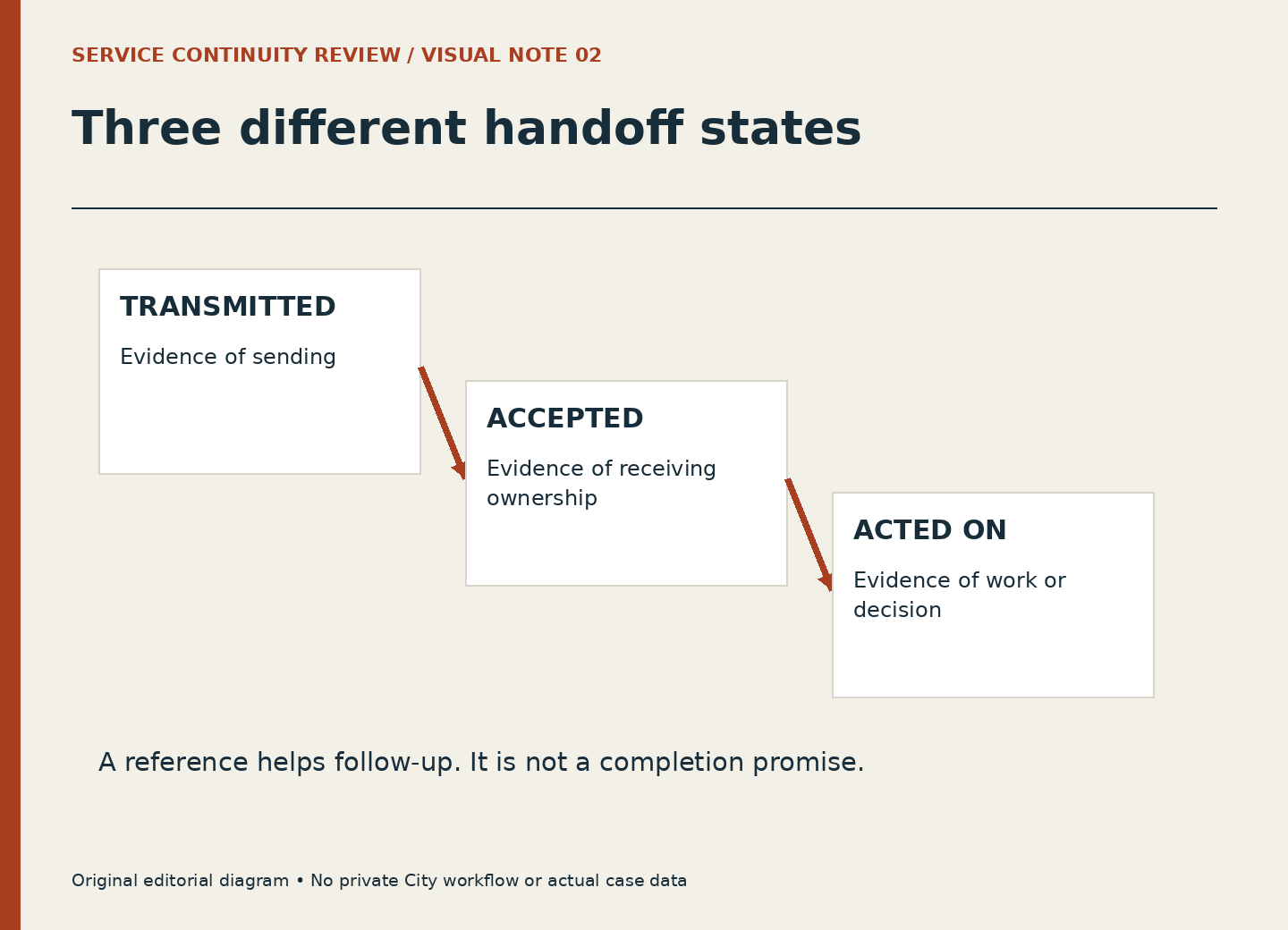
Keep the diagram’s three states separate. “Transmitted” describes sending. “Accepted” describes recognition by the receiving process. “Acted on” describes a later operation or decision. These are this publication’s analytical terms, not asserted PHX ACT status labels.
Use a fictional employee observation
Imagine an employee notices a non-emergency maintenance condition while carrying out ordinary duties. In a training exercise, the employee identifies the applicable current reporting instructions and later receives the acknowledgment described by that process. The next status question should use the provided reference and designated route. The example is invented; no real report has been made or examined.
Now change the task: the same employee has a personal benefits question. The maintenance-report reference is irrelevant. The employee should use the current official benefits or employee-administration resource. Keeping those tasks apart avoids copying personal employment information into an operational service report.
Do not promote a historical announcement into live instructions
A dated newsletter can establish what was publicly announced at that time. It cannot establish today’s screen layout, eligibility, access method or response time. If the announcement’s resource link is unavailable to you, do not infer that the program ended or try to bypass access controls. Ask through the current official employee route.
Nor should the announcement become a reason to use employee reporting for urgent danger. The responsible City service’s current urgent or emergency instructions govern those situations. This publication is not monitored for reports and cannot dispatch help.
Make a one-page reading note
The useful output has five fields: source date, intended audience, report purpose, acknowledgment described and status destination described. Add a final line listing what requires current confirmation. That note explains why the employee reporting resource matters without copying private instructions or pretending that an independent article is official support.
Read next
- eCHRIS, Public Service Portals and the Work They Actually Hold
- A Complete Service Request Is More Than a Filled Form
- Close the Service Loop with Evidence and a Clear Next Step
Sources and limits
Public sources checked October 5, 2026. Editorial examples are hypothetical; official instructions and case-specific decisions remain with the responsible City service.
- City of Phoenix: PHXConnect, February 12, 2025
Historical public announcement distinguishes PHX ACT employee service reporting from public myPHX311. Not evidence of current private access.
- City of Phoenix: Human Resources
Public workforce responsibilities and HR destinations; no private employee records accessed.
- City of Phoenix: Benefits
Public employee benefits context and City-provided eCHRIS link. No individual enrollment status established.